Analysis

In-depth analysis of trends, policies, and challenges in higher education worldwide.
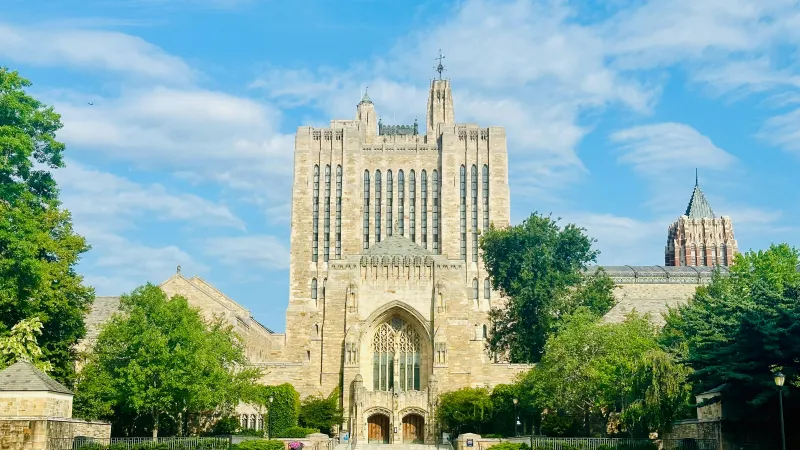
Yale faculty report rising fears and self-censorship over academic freedom

· By H. Yang

A Yale faculty survey found declining academic freedom, rising fears of complaints and retaliation, and growing self-censorship in teaching, research, and public engagement since 2025.


Universities on the brink: Decoding the UK higher education funding crisis and the path forward

· By Eleanor Shaw

House of Commons report warns that 45% of English universities face deficits, argues that reliance on international fees mask systemic flaws requiring permanent public funding reform.

Understanding China’s academic pyramid: beyond faculty titles and talent titles

· By H. Yang

China’s higher education system operates through multiple overlapping hierarchies. In addition to formal academic ranks such as Lecturer, Associate Professor, and Professor, research funding, national talent programs, honorary distinctions, and administrative appointments all shape academic prestige and career progression.

Australia’s student visa system is tightening—but not in the way many assume

· By H. Yang

Australia’s student visa system is tightening unevenly, with Higher Education at a 20-year low and sharp country-based differences showing structured rather than random approval patterns.

New Zealand student visas 2022–2025: from recovery to recalibration in global student mobility

· By H. Yang

New Zealand’s offshore student visa data (2022–2025) shows a cycle of recovery, rapid growth, peak demand in 2024, and recalibration in 2025. While volumes fluctuated, approval rates stabilised again, revealing a more selective and regionally differentiated global student mobility system.

Choosing the “in-between” option: why students opt for international branch campuses in China

· By H. Yang

International branch campuses are often analysed as instruments of global higher education strategy. Less attention, however, has been paid to how students themselves arrive at the decision to enrol in them.

China’s careful opening: how regulation is reshaping transnational higher education

· By H. Yang

China’s transnational higher education system has evolved from cautious experimentation to a strategically integrated part of its higher education landscape. While the country is gradually opening its education market—allowing more autonomy, for-profit models and even pilot fully foreign-owned institutions—it continues to enforce a tightly controlled regulatory framework. This reflects a deliberate balance: leveraging global education to support national development, while safeguarding educational sovereignty, political oversight and social values.

The PhD revolution: building a triple helix for the knowledge economy

· By H. Yang

By reimagining the doctorate as a shared enterprise rather than a solitary pursuit, a growing alliance between universities, industry and the state is reshaping what it means to earn a PhD—and what that degree is for.

Industrial doctorates reshape PhD training as UK model tightens links with industry

· By H. Yang, R. Jeffrey

Engineering doctorate case study suggests doctoral education is shifting towards applied, industry-embedded knowledge production

China’s international branch campuses: engines of opportunity – or inequality?

· By H. Yang, M. Wu

China’s international branch campuses are expanding rapidly, promising global pathways and English-medium degrees. But new evidence suggests they disproportionately serve urban, affluent students, with family income emerging as a decisive factor in access. Rather than widening participation, these institutions risk reinforcing existing inequalities within Chinese higher education.