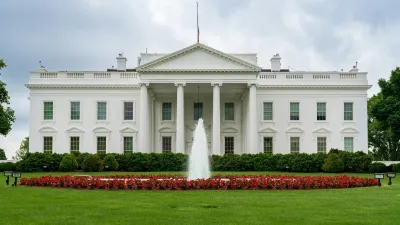
The Trump administration has terminated all 22 seated members of the National Science Board (NSB), the statutory body responsible for overseeing governance of the National Science Foundation (NSF), raising concerns across the U.S. scientific community about political intervention in federal research governance.
According to U.S. media reports published in late April, board members received notices from the White House informing them that their appointments had been terminated with immediate effect. The move came shortly before the board was scheduled to meet and while members were reportedly finalizing a report on the state of U.S. science and engineering.
The White House has argued that the board’s governance structure, established under the 1950 legislation that also created NSF, may require modernization. Officials stated that NSF’s daily operations and grant-making functions would continue without disruption.
What is the National Science Board?
While NSF is one of the United States’ most important federal funders of scientific research, NSB serves a distinct governance and advisory role.
NSB is responsible for:
- setting broad policy direction for NSF;
- approving major strategic initiatives and certain large-scale infrastructure projects;
- advising the U.S. president and Congress on science and engineering policy.
Unlike standard advisory committees, NSB members are typically appointed for staggered terms, a structure intended to preserve continuity and reduce short-term political influence over national research priorities.
Because of this design, the removal of all sitting members before the end of their terms has drawn scrutiny not simply as a personnel decision, but as a possible shift in executive control over long-standing scientific governance mechanisms.
Funding impact is likely limited in the short term
Despite the scale of the decision, experts say immediate disruption to NSF grant-making is unlikely.
NSF’s routine funding operations largely rely on:
- internal program officers,
- peer-review panels,
- grant administration systems.
As a result, ongoing grants, proposal evaluations, and standard funding competitions are expected to continue.
However, uncertainty surrounding NSB may create longer-term governance risks.
Major research infrastructure investments, including supercomputing facilities, observatories, and large engineering projects, often require higher-level strategic approval. Institutional uncertainty could also affect universities planning long-term research initiatives.
Part of a broader policy shift
The NSB decision appears to be part of a broader pattern of intervention in science-related advisory and regulatory bodies during Trump’s second term.
Other recent actions have included:
- restructuring vaccine advisory bodies linked to the Centers for Disease Control and Prevention;
- increased scrutiny of public health recommendations;
- proposed changes to federal funding priorities involving climate science, public health, and diversity-related programs.
Supporters of the administration argue these reforms are necessary to address what conservatives describe as an entrenched administrative state, including expert institutions perceived as politically or ideologically unbalanced.
Critics argue that such interventions risk weakening institutional stability and reducing the independence of scientific advisory systems designed to function across administrations.
A broader debate over expertise and trust
The controversy reflects a deeper tension in U.S. governance: how elected governments should interact with expert institutions that hold substantial policy influence but limited direct democratic accountability.
For decades, U.S. science policy has operated through a hybrid model in which elected officials retain final authority while specialized bodies such as NSB and federal advisory committees provide technical guidance.
That arrangement is now under increasing strain.
Critics of the current system argue that expert institutions can become politically homogeneous, insufficiently accountable, and resistant to policy change.
Defenders counter that excessive executive intervention may undermine the predictability and independence required for long-term research ecosystems.
These tensions are particularly visible in politically sensitive areas such as:
- vaccine policy,
- climate regulation,
- energy transition,
- biotechnology governance.
As public trust in institutions becomes more polarized, scientific governance itself has become a contested political arena.
What happens next?
Whether the dismissal of all NSB members represents a temporary restructuring or a more lasting institutional shift remains unclear.
In the near term, NSF remains operational and continues funding thousands of research projects across U.S. universities.
In the longer term, however, the episode raises questions about:
- executive authority over statutory scientific bodies,
- the independence of research governance structures,
- and the resilience of U.S. science institutions during periods of political polarization.
For international universities, research partners, and students considering study opportunities in the United States, the situation is worth monitoring—not because U.S. science funding is collapsing, but because the governance environment surrounding federal research funding appears to be entering a more politically contested phase.
- Log in to post comments