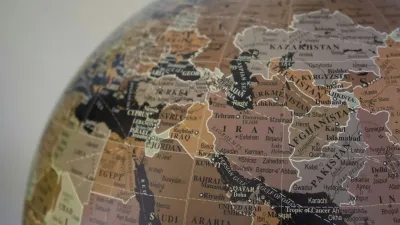
International cooperation in education—covering student and staff mobility, joint research, capacity building, and institutional partnerships—has long been justified as a global public good that supports knowledge exchange, skills development, and mutual understanding across borders. However, this assumption of openness is increasingly under pressure. In the mid-2020s, international education is being reshaped not only by globalization, but by intensifying geopolitical fragmentation, strategic competition, and security-driven policy shifts.
Geopolitics is reshaping the rules of engagement
The most significant shift in international education is the intensification of geopolitical competition and its growing entanglement with domestic policy regimes in key destination countries. Global tensions—particularly the strategic competition between the United States and China, the Russia–Ukraine war, and persistent instability in the Middle East involving Israel, Palestine, Iran, and broader U.S. security alignments—are reshaping the external environment in which universities operate. These developments have disrupted academic partnerships, redefined research priorities, and increased the political sensitivity of international collaboration across regions.
At the same time, internal policy shifts within the United States are reinforcing these external pressures through the securitization of higher education. Immigration and visa policies have become more restrictive and less predictable, particularly for students and researchers in strategically sensitive fields such as artificial intelligence, engineering, and advanced sciences. Expanded security screening, longer administrative processing times, and periodic uncertainty in post-study work pathways have all contributed to reduced predictability in international student mobility.
In parallel, U.S. higher education institutions are increasingly operating under expanded research security frameworks. These include tighter oversight of foreign funding, enhanced compliance requirements for international collaboration, and closer alignment with export control regulations. Universities are now expected to balance academic openness with national security responsibilities, particularly in areas considered dual-use or strategically significant.
Taken together, these external geopolitical conflicts and internal policy shifts are converging into a broader transformation of the global higher education landscape. International education is no longer governed primarily by academic globalization alone, but by a combination of interstate rivalry, regional conflicts, and the growing securitization of domestic higher education systems. This dual pressure is reshaping the rules of engagement, making international cooperation more conditional, more regulated, and increasingly dependent on geopolitical trust and policy alignment.
Three structural drivers of change
The geopolitics of knowledge
Knowledge production is increasingly treated as a strategic national asset. Governments are tightening oversight of research partnerships, data flows, and talent mobility in fields considered strategically sensitive, including artificial intelligence, semiconductors, and biotechnology. This is reshaping the traditional model of open science into a system of “managed openness,” where collaboration is permitted but conditional on trust, alignment, and security assessments.
The global competition for talent
The global “talent war” has intensified but is becoming more selective. While countries continue to compete for highly skilled graduates, particularly in STEM fields, they are simultaneously tightening long-term migration pathways and increasing uncertainty around post-study work opportunities. This creates a structural paradox: openness in recruitment coexists with caution in retention, producing instability in international student flows and decision-making.
Fragmentation of global education networks
Together, these dynamics are producing a more fragmented and multipolar higher education landscape. Rather than a single integrated global system, international education is increasingly organized into regional clusters shaped by geopolitical alignment, trade relationships, and regulatory compatibility. Cooperation is becoming denser within regions but more conditional across them.
Consequences for universities and education systems
For universities, the immediate effects include increased compliance requirements, slower approval processes for international partnerships, and heightened reputational risk in sensitive research areas. STEM disciplines face the highest level of scrutiny, though humanities and social sciences are also indirectly affected through broader diplomatic tensions.
For institutions in lower-income countries, these shifts risk deepening structural inequalities. Reduced North–South mobility, funding volatility, and dependence on a narrower set of partners may weaken institutional capacity unless deliberate diversification strategies are adopted.
Emerging responses: adaptation rather than retreat
Despite intensifying geopolitical pressures, international education is not contracting in scale so much as evolving in form. Institutions are increasingly adopting adaptive strategies that preserve global engagement while managing regulatory, financial, and political uncertainty. Rather than a retreat from internationalization, what is emerging is a more differentiated and strategically managed model of cooperation.
One major shift is the normalization of hybrid internationalization models. Physical mobility remains important, but it is no longer the sole or dominant channel of global engagement. Universities are investing more heavily in digitally enabled forms of collaboration, including structured virtual exchange, joint online teaching, and co-designed curricula across borders. These models allow institutions to maintain international exposure even when mobility is disrupted by visa restrictions, cost pressures, or geopolitical shocks. While they cannot fully replicate the social and cultural depth of on-campus mobility, they are increasingly viewed as a resilient baseline layer of international education.
At the same time, internationalization at home is moving from a supplementary concept to a core institutional strategy. Universities are embedding global learning outcomes into domestic curricula to ensure students develop intercultural competence without necessarily traveling abroad. This shift reflects both equity concerns—expanding access for students who cannot participate in mobility—and strategic concerns about the unpredictability of cross-border movement in a volatile geopolitical environment.
Another important response is the rebalancing of partnership geographies. Institutions are actively diversifying away from overdependence on a narrow set of traditional partners, particularly in North–South configurations. Instead, there is growing emphasis on regional ecosystems and South–South cooperation, especially in Asia, the Middle East, and parts of Africa. These partnerships are often perceived as more politically stable and better aligned with regional development priorities, even if they may not yet carry the same prestige as established Western collaborations.
In parallel, universities and governments are increasingly treating international education as risk-managed infrastructure rather than purely academic exchange. This includes more formal due diligence processes for partnerships, stronger attention to data governance and research security, and expanded institutional capacity for compliance management. While this introduces additional administrative burden, it also reflects an effort to sustain cooperation under more constrained conditions.
Taken together, these developments suggest that international education is not retreating under geopolitical pressure. Instead, it is becoming more modular, more digital, more regionally diversified, and more strategically governed. The key transformation is not a reduction in international engagement, but its reconfiguration into multiple parallel modes of cooperation with varying levels of intensity, risk, and political sensitivity.
Policy implications and strategic priorities
First, governments and institutions need clearer and more transparent frameworks for managing international research collaboration. Balanced approaches to data governance, export controls, and intellectual property protection are essential to avoid unnecessary fragmentation of global science.
Second, sustained investment in digital infrastructure and pedagogical capacity is critical to ensure that virtual forms of international education are inclusive rather than reinforcing inequality.
Third, institutions should diversify their international partnership portfolios to reduce overdependence on any single region or political bloc, thereby increasing resilience to geopolitical shocks.
Fourth, capacity-building in lower-resource systems should become a long-term strategic priority rather than a project-based activity, supporting more equitable global knowledge production.
Finally, academic freedom must be preserved within evolving security frameworks. Without it, the core value of international education—open inquiry and knowledge exchange—will be significantly weakened.
Conclusion
International education is entering a more fragmented, conditional, and politically shaped era. The assumption of frictionless global mobility is giving way to a system characterized by managed openness and regional clustering. However, this is not a story of decline—it is a story of transformation.
The challenge for institutions such as The Educationist is to design and support cooperation models that remain resilient within this new environment. The future of international education will depend on balancing openness, security, and equity—without allowing any one of these forces to dominate at the expense of the others.
- Log in to post comments